Showing posts with label day-to-day life in Germany. Show all posts

Tuesday, December 10, 2013


Heidelberg Fussball Watching

By Nick Wigert


                Usually I am not the kind of person who enjoys planning things for a group of people. Thinking of a spice essay topic was something that I did not think would be very easy for me because of this.
Last night I had been looking at fussball games that would be on this upcoming week. Turns out that tonight was a big night for Champions League and that was when it came to me. I knew I wanted to watch the game, so why not get a person or two and go out to find somewhere to watch it. That is what I did.
                Matt and I went to Destille, which is a bar off of the Haupstrasse that I actually enjoy going to. It is a very small, almost cozy feeling place with a tree in the middle of the bar. I had just assumed that since Borussia Dortmund would be playing Arsenal that most bars in the town would be playing that game because it involved a German team. I was right. When we first arrived at the bar it was not very crowded, which was something that I was not really expecting. Destille is always extremely packed; at least in the times that I have been there or just walking by there. I also made sure we left the ESC early because I wanted to make sure we got a seat at the bar. This takes me off on a bit of a tangent, but since we have been here in Heidelberg I have not really gotten to sit at the bar in any of the places we have gone because they are always so crowded and we always go out too late. Aside from that, I have always wanted to become a regular at a bar. This means being someone the bartender recognizes anytime you walk into the bar. That aspiration really stemmed from watching the show How I Met Your Mother, which is one of my favorite shows. Anyway, we got a seat at the bar and of course as I had expected about 20 minutes or so into the game the place became a mob seen. The night as a whole was something I really enjoyed. I was able to do something I loved to do while planning it myself. I was glad that I was able to put the night together and actually follow through on something that was planned.
                This experience really made me feel like I was a real part of German society. I feel like there is nothing that immerses a fussball fan into a new culture than sitting in a local bar with a bunch of rowdy local fans watching a Champions League game. It is experiences like this that really make me thankful that I am here in Germany. I came here not to be an American in Germany and act like an American while here. I really truly wanted to attempt to be more German in any way possible. This night was one that I really greatly enjoyed and hopefully I will be doing it again sometime in the near future.


ESPN. (2013, October 23). ESPNFC. Retrieved from ESPN.com: http://espnfc.com/fixtures/_/league/uefa.champions/uefa-champions-league?cc=5739


Trying Something New
By Jennifer Dall

            Before I came to Germany, I never drank alcohol and was never interested in doing so. Getting drunk never appealed to me so I stayed away from even tasting drinks like wine and beer. If you asked any of my friends or especially the people on my freshman floor, they would tell you that I was even a little closed minded about the topic. 
            Now, deciding to go to Germany changed all of that. In the country that gave birth to the world’s largest beer festival, was I going to still block out drinking? Was I going to deprive myself of experiencing something that is so culturally significant to the country that I will be staying in for four months? The short answer is no. The long answer involves me sitting in my bed trying to reevaluate my life decisions but eventually, still comes out to a solid no.
Too long have I been stubborn about something that really is not a big deal. I have come to the realization that drinking is not a 0 to 60 phenomenon. Just because I decide to drink one glass of wine or one mug of beer does not mean that I will wind up in the bathroom an hour later puking my brains out. I consider myself a very responsible person and I refuse to let my fear of losing control hold me back from having the best experience possible while studying abroad.
The wine tasting excursion is the perfect example to prove my point. The old me would have been annoyed by the mere fact that an event focused on alcohol was worked into the schedule. I would have immediately cast the excursion aside as pointless and dreaded that impending day that it would arrive. But now, after pushing myself to be as open as possible to new experiences, I embraced the wine tasting. I even looked forward to it. It was the perfect opportunity to test my new frame of mind.
By being so open, I learned to appreciate wine making as a family business and as a passion. The woman who guided our tasting is part of the ninth generation of family working continuously to make Adam Muller wine. When she spoke about her family and the wine that she presented to us, I could tell that she was extremely proud of her family’s work and its long rooted history within the town of Heidelberg. Between her passion for wine making and the quaint living room setting of the tasting, I felt comfortable enough to indulge myself in drinking each glass of wine.

During those couple hours, I kept thinking back to freshman year and how far I have come since
then. Not only was I mentally ok with sipping on wine, but I was in the company of friends and teachers doing the same thing. Nothing bad happened to me or them and I was able to enjoy another side of Heidelberg that is somewhat off the beaten path. This experience has definitely encouraged me to continue my efforts of keeping an open mind to new things I may come across while studying abroad and during life itself. I greatly enjoyed the wine tasting and am looking forward to more positive new experiences down the road!

Monday, December 9, 2013

Berlin
By Loretta Vieger

            Do you know the feeling of loving something so much, then having it offered to you for free? This is how I feel about coffee. Upon our arrival to Berlin, or as I like to call it Bearlin, and getting to the hostel there was a table of free coffee waiting for us. I was so thrilled I wanted to drink 5 cups but I had to restrain myself – I didn’t want to take advantage and sometimes too much of a good thing can be bad. Regardless, I knew that this was going to be the start to a very good weekend.
            Having been on an abundance of tours the past few months, I honestly wasn’t expecting much from this tour. However, the tour turned out to be my favorite part of the weekend. Obviously it was because of the tour guide. She was extremely outgoing and knowledgeable. And the way that she described events or art made me feel something and that is one of the most important parts of learning in my opinion. Especially on walking tours. If the tour guide can make you feel something and make you imagine yourself living in the time of the history, then I think that makes for a really excellent tour guide.
            First and foremost is the history behind the German and the French. I am the worst person at remembering history and I often times can’t remember whose friends and who isn’t. The Brandenburg Tor represents that the German always have an eye over the French. This relationship is also represented in the Gendarmenmarkt where the German and French cathedrals are located. It’s crazy to me how much deeper architecture and statues go other than being something extremely beautiful.
            Another memorable site is the Memorial to the Murdered Jews of Europe. I like how it’s left up to the interpretation of everyone much like “beauty is in the eye of the beholder”. However I didn’t like this concept because often time I just see things for what they are and not much else. My favorite interpretation of the memorial is one of a young boy – that it represents hope because no matter where you are in the memorial you can always find a way out.
            Professionally, this exhibit gave me some perspective on a budgeting aspect for large projects. The tour guide informed us that the memorial was way over budget and actually was not constructed as well as it should have been seeing as how pieces of the blocks are starting to crack and can eventually break off. This isn’t good for some of the blocks reaching 15 ft in height.
            If it’s free, I’m all about it aka free continental breakfast. Not only is breakfast my favorite meal of the morning, but when it’s a buffet that makes it so much better. So after eating a very hearty and filling breakfast on the second day, and continuing with the theme of Judaism, the group headed out to the Jewish Museum of Berlin. In my opinion this tour was interesting because the museum had a lot of underlying meaning to it as well as the paintings and exhibits. At first I wasn’t particularly interested in Jewish history because nobody in my family is or has ever been Jewish but after this tour and some explanations from our tour guide I began to sympathize with them and what they’ve been through. Life wasn’t easy for Jews 60 years ago but they powered through it and are still a lively force in today’s world.
            Day two ended with dinner at a really nice restaurant for Azeala’s birthday. The restaurant was outrageously expensive so I only got a small pumpkin soup but it was surprisingly really delicious. I have noticed from living in Germany and not being presented with my usual choices of food like burgers and chicken strips, I’m beginning to branch out a bit more and try different foods that I wouldn’t normally and I quite enjoy it! I feel like I’m becoming more cultured in the food world and I might even make this a habit and start trying more different foods back home.
            The last day was my second favorite out of the three days we were in Berlin. Starting off by filling myself up on delicious breakfast and coffee then heading out to the German Parliament I was upset because it rained earlier and the ground was muddy which got the bottoms of my jeans dirty. But I figure I couldn’t let that ruin my day. The Parliament, which is basically just a meeting place for the politicians, is actually a really beautiful and symbolic building. It’s also extremely modern except for the front and the 4 corners, which resemble the old castle like style from centuries ago. The best part was getting to go up into the top dome and look out across the whole city. I enjoyed the audio guide a lot and I think it kept the tour interesting and kept us involved.
            After the Parliament, the group split up and we were allowed free time. Emily, Kelsie, and I took a look around some souvenir shops and stopped at a Kebab restaurant. The Kebab I ate was literally the best Kebab of my entire life. I would go back to Berlin just to eat another one. Something about the sauce and the meat mixed together with perfectly toasted bread was so delicious I didn’t want to stop eating it. After having lunch, we made our way over to the East Side Gallery.
            The East Side Gallery is an open-air gallery that runs along the Spree River. It consists of painted pieces of the Berlin Wall and runs about 1.3 km long which for reference is a little under a mile. The wall was painted in 1990 but today most of the paintings are covered in graffiti (Barwick, 2013). More or less people just wrote their names or small sayings all over the paintings. I think this is disrespectful to the artists because now some of the paintings cannot even be seen in their full glory. Anyway, walking along the wall I could tell that the paintings were beautiful and controversial. One of the pieces of the wall had “PEACE” on it and I thought this was plain and simple but got the point across with no confusion. Another piece of the wall said “Politik ist die Fortsetzung des Krieges mit Anderen Mitteln” which translates to “Politics is the continuation of war by other means”. This is more of a profound saying but I think anybody can understand the point the artist was trying to get across.
            All in all, I thoroughly enjoyed our trip to Berlin. I learned a lot about the history of the Berliners, the Germans, and different Street art as well as having a good time and bonding with some ESC students. I would go back any day.

Reference

Barwick, I. L. (2013). East Side Gallery. Berlin Guide. http://berlin.barwick.de/sights/the-berlin-wall/east-side-gallery.html
The German Recipe
By Leah Martindill


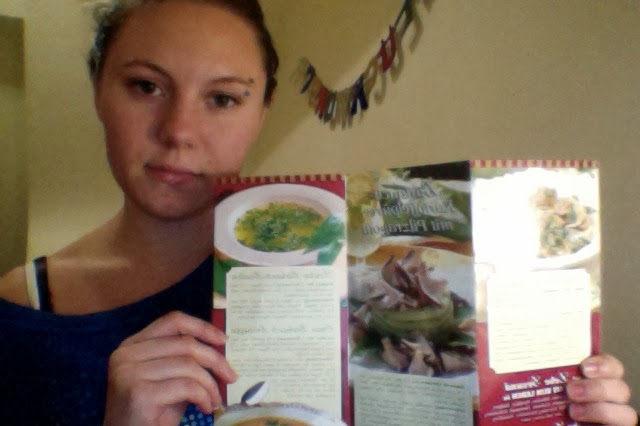
            One of my goals of studying in Germany is to go home recognizing every day, useful German words. I do not expect that I will be able to pronounce or spell them all correctly but if I can just know what is being written or said I will be satisfied. I figured a good way to learn a few household terms in one go would be to follow a German recipe. Not necessarily German food but a recipe in German. I decided I was going to do this and then the recipe was literally just handed to me.
            Over the weekend I went to the red-tape event in town. During it, there was a women standing on the sidewalk handing out samples of toast with a pesto spread on it. I tried it and it was absolutely delicious. They also told me that it was vegan and could be stored for up to half a year if refrigerated. It did cost nine euros, which is a bit over my budget so I did not buy it right away. I thought about it and decided it was a worthy investment. It was now two days later and I had to wander around a bit to find the store again. It was quite the walk and I arrived sweaty but excited. Then as I was checking out the women handed me a list of recipes to make with the spread. I was headed to the grocery store afterwards anyways and decided to see if I could find the ingredients I needed.
            I went to the Penny grocery store, which is near Bismarkplatz because it was on my way home. I tried to match up words for the ingredients with the words on the sign at the store because I did not really know what any of them meant. I did know that I was trying to make pesto mashed potatoes though. The recipe I was following is called “Barlauch-Kartoffelpuree-mit pilzragout.” Literally the only word I knew was kartoffelpuree, or mashed-potatoes. So I headed to the potatoes first. Then something interesting happened. This girl from Scotland was looking for lactose free yogurt and asked for my help. I, of course, had no idea where to look for that but I helped anyway. Then I had her helping me try to figure out the recipe. We never did find her yogurt but we were able to a lot of the stuff for me.
            I needed muskat which is nutmeg, shiitake pilze, or shiitake mushrooms, sojamilch, which is soymilk, and I did not figure that out at the store so I just ended up with regular milk, and sahne or cream.
            The recipe itself basically was to make mashed potatoes and add all this extra stuff into it so I didn’t have to translate too much to do it. I got the words for mix, stir, pour, boil, etc. so it was a pretty cool experience.

            The mashed potatoes turned out pretty good but I do not think I will often go through the effort to make them again, but maybe. I accomplished my goal of figuring words out and although I am sure I will not remember them all I hope I will be able to recognize a few of them here and there. This is definitely something I am going to try again. 
Darmstadt 10k
By Gerard Tyrrell

           My first independently planned trip in Germany was a 10k race in Darmstadt. Over the summer, a friend of mine from home who currently studies in Berlin had told me about the first time he ran this race, two years ago when he was living with a host family in Darmstadt. He wanted to run it again this year. Because I was going to be in Heidelberg, we made plans to meet up, stay with his old host family and make a weekend trip for the race. We’d arrive in Darmstadt on Friday, run the 10k on Saturday, and then on Sunday we could travel around the city and hang out. Everything seemed perfect: Darmstadt wasn’t too far from Heidelberg, we’d have a place to stay, we’d get to hang out for a weekend, and I’d be running my first official 10k in another country. As an avid runner, I was particularly excited by this opportunity, and in addition I hadn’t seen my friend much since he moved to Berlin so I was excited to be able to hang out and catch up.
            However, things did not go exactly as smoothly as planned. Shortly before arriving in Germany, I realized my study abroad program had three planned excursions the same weekend that I had planned to stay in Darmstadt for the 10k. As I looked through the semester calendar in disbelief at how many other open weekends we had, I was frustrated that the one weekend that I made plans for had not one, not two, but three excursions. However, I was determined to make this race work and I saw a small window of opportunity; we had our trip to Frankfurt on Friday and trips to Schwetzingen Palace and Speyer on Sunday, but Saturday, the actual day of the 10k, was still free. Frankfurt is not too far from Darmstadt, and I thought that maybe I could go on the excursion to Frankfurt, and afterwards go from there straight to Darmstadt. Then I’d travel back to Heidelberg Saturday night after the race so that I’d be able to make it to our 8:00 am departure to Schwetzingen Palace on Sunday morning. Sure, I’d be reducing my weekend in Darmstadt to only one day and cramming four trips into three days, but that was my best option.
            After a long day in Frankfurt, I split up from the group to go find the Frankfurt train station. As I grabbed my bag and got off the bus, I couldn’t help but question how much I wanted to do this. Here I was, fatigued and finding my way alone in an unfamiliar city to the train station, while everyone else got to relax on the bus and enjoy a peaceful ride back to Heidelberg. However, I knew it’d be well worth it the end, and so I took a deep breath and made my way to the train station. Eventually I met up with my friend, and he introduced me to his host family. I was instantly taken back by their warmth and kindness, which was well appreciated after a long day. I could tell that they were intent on making it a nice, albeit short stay for me: I was delighted to receive home cooked meals, and the family showed me around their city Saturday morning and afternoon before the race. It had a very interesting history, and I was surprised to learn that Tsarina Alexandra Feodorovna, the last Tsarina of Russia, was born in this little, unassuming city. I was so appreciative of their hospitality that the race seemed more like just another part of the trip rather than the main highlight.
            I learned a lot from this trip. First of all, I learned to stick with my plans and try to make them work even when circumstances aren’t exactly the most cooperative. Even though I was totally exhausted by the end of the weekend, I was still so glad to have had that experience. In fact, I enjoyed it so much that I’m currently looking into running another 10k before I leave. I also really enjoyed meeting and spending time with the host family. Not only did this increase my knowledge of German culture, but provided a great opportunity for me to practice my German language skills, which is a huge goal of mine during while studying abroad.

Sources

Gelardi, Julia. (2005). Born to Rule: Five Reigning Consorts, Granddaughters of Queen Victoria.             New York, NY: St. Martin’s Press, 5.

Tuesday, November 19, 2013

What to Say about Italy!
By Neel Desai

 Oh, do I have a lot to say about Italy. It was absolutely amazing. It surely was different than Germany, and that made me miss Heidelberg. I had some really great experiences, but also many that made me skeptical of Italy. I met some really great and helpful people, but also a handful of not so friendly people. Overall, it was an experience of a lifetime and I learned some great things about myself, history, and a new culture.
            First, the trip started in Rome, a beautiful city full of lots of history. The hostel I checked into was basically a hotel, which was a great start to the trip and city. The first day was tiring, so I stayed around the area of my hostel and went to a local restaurant and bakery. Obviously the first thing I had to try in Italy was pizza. It’s hard to explain the difference of regular pizza compared to pizza from Italy, but I guess the best way to say it is that you HAVE to eat pizza from Italy with a fork and a knife. There is a lot of sauce and cheese and basically impossible to pick up at a slice, but that’s what makes it so amazing. Throughout the trip in Rome, I visited the Coliseum, Roman Forum, Vatican City, The Pantheon, St. Peter’s Basilica, Sistine Chapel, Trevi Fountain, and a few more. I was really happy that we were able to see all of these historical sites in the four days we had in Rome. My two favorite events would have to have been being able to see the Pope at the Vatican and Trevi Fountain. Even though I am not Catholic, it was amazing to see a man with so much respect. In the few minutes I was able to see him going around the crowd, I understood why this great man has so much respect. He went throughout the entire crowd, shook hands with viewers, took babies into his arms and blessed them, and spoke to others. He took his time speaking to the people who love and respect him the most. The Trevi Fountain was just something amazing to see and to learn that it was made so many years ago makes it even more amazing. The intricacy in the architecture was something I have never seen before.
            Next, I took a train over to Florence where I stayed in a hostel that was much different than the last in Rome. It was more of a house that had rooms being rented out. The owner was very personable and helped me with my trip planning. The room was not as nice, but the owner made up for it in the helpfulness. While I stayed in Florence I was able to see the Uffizi Gallery, Florence Cathedral, Ponte Vecchio Bridge, a copy of the The David, The Duomo (which was literally a 2 minute walk away), and a few others. I really enjoyed most of the and again learned a lot from each and every one. I really enjoyed seeing the Duomo. It was a clean white Cathedral that the light came perfectly on. I was able to go to the top of it and overlook the entire city. Although the history of Florence was great to see, the one thing that stood out to me the most was a bar that I found. The owner was such a nice guy, the food was absolutely amazing, and he let me taste a least 5 beers from around the world. He had beers from around the world in a showcase and beers from Czech Republic, Germany, USA, and much more on tap. He let me taste all of them to see which I would like the best. Out of the 4 days I stayed in Italy, I had 5 meals from that bar. The owner remembered me after the first day and knew exactly what I wanted to order. He even customized my order to my liking. The owner of the bar is someone who I will never forget and his bar is the most memorable place in Italy.
            Lastly, I made my way to Venice. I was really excited to go, but it really didn’t meet my expectations. It was really cool to see the canal and the water streets, but the buildings were really dirty. It was a bit of a sketchy city and people there took advantage of tourists. Servers at restaurants would try and get anyone walking by to come to eat there, charge extra for “complimentary” bread, and give big bottles of water and soda without asking. I was able to make my way to another Island in Venice called Murano. It was an island for glass making. All the shops there were shops where they blew their own glass. I bought a lot of souvenirs for myself and my family there. I am going to mail it to my family as a surprise. Overall, the experience was great. It was a few downsides, but I learned a lot about how I deal with certain situations and deal with a high stress environment. I’m glad I made a trip to Italy and would love to go back in the future!

Monday, November 18, 2013

The Questions You Should Ask . . . 
By: Liam Walsh

             The first article I read from “When in Germany, Do as the Germans do,” is titled “Questions you should ask – part 1.” In this article it proposes three questions you should ask yourself before you leave for Germany. I found this article to be ironic but eye opening because I read it after I already left, but it gave some insight to activities that I already performed without thinking much about it.
            The three questions that the article asked were: 1) Will my credit card work in Germany? 2) Will my cellphone work in Germany? 3) How about electricity and appliances? The reason that there are important question to think about before leaving is because European and more specifically German standards of living are much different then those found in America.
            The article breaks down the questions one-by-one and gives us their answers. For question 1, they say that most major credit cards are accepted in restaurants and shops that take credit cards; however they do note that not all stores accept credit. For question 2, they wrote that phones from North America won’t work Germany, but phones from England will. Lastly, for question 3, they say that German electricity comes in 220-volt, 50-hertz variety, which will destroy most North American 110-volt appliances without a converter.
            After reading the article I thought about my experience with my first week in Germany, and how this questions applied to my stay so far. For the credit card, I know that I can take money out of the ATM near by, which I might be doing often. It’s rare that I see a store that takes credit cards at all. I think REWE does and Sports Arena does, but my theory is that they only do so because they are major chains in a touristy area. For the second question I already dealt with my phone before I left. I called Verizon (my carrier) and let them know I was going abroad. So my phone can make calls and send texts because I’m on the Vodafone network. However, I should note that I don’t use the phone unless I am connected to Wi-Fi. As for the third question, I have a converter plug to use for my phone and laptop, however I don’t have a transformer so my alarm clock that I brought won’t work.

            Throughout the text I found that the article’s questions and answers are mostly correct. The only reason I say mostly is because with IPhones 4s and 5 you can have international usage, so through a technicality I can use my phone, but I still choose not to so I don’t have a major debt when I get back.  The lesson I learned from reading this article and thinking about how it relates to my first week here is that before you travel anywhere, outside the country or to another part of town, you should always think of how different it can be, similar to how in New Jersey you can’t pump your own gas, yet in New York most gas stations are self-service.

Friday, November 15, 2013

Frankfurt

By Ashley McKenna

            The Frankfurt exclusion was a trip I originally underestimated before coming here. I imagined it as an urban and rustic financial city. However, driving into the city, I was completely astonished by the modern buildings and electrifying buzz in the air. There were men in business suits walking over for the preparations of the Frankfurt car show which many students chose to attend that weekend. The streets were lined with cobblestone giving the city an older feel to it.
While walking around, I noticed several (small) skyscrapers and buildings.  Along with the bustling walk of life, the city of Frankfurt actually reminded me a lot of Boston as well as New York City. I worked in New York City this summer so Frankfurt gave me a taste of home which I was very happy about. Our tour guide was from the town of Frankfurt and lived there for about 15 years. She gave us some background about the city and how 90% of the town was destroyed during WWII. It seems as though that the main church of the city wasn’t destroyed because supposedly it was a landmark for finding the city and bombing the rest of the area. While observing the town, there were several architectural styles that sparked my interest. Some buildings were from the 50’s when they were rebuilding parts of the town.  However, many of the locals were upset that they were trying to make the town modern so they rebuilt parts of the city to represent German’s history including the colorful side by side walls. Regardless, I appreciated both past and present designs. 
            What stood out for me the most, was the Eiserner Steg Bridge. Also known as the “Love Lock Bridge,” this iron beauty has been transformed with “love padlocks” making it one of the most recognizable landmarks in Frankfurt. Every year, hundreds of couples come to this bridge and attach locks – usually inscribed with their names and date. Once the lock is bound to the bridge, the couple throws out the key into the river symbolizing a promise for their eternal love. Fascinated by such colorful locks, I couldn’t help but to imagine how many lovers came to this bridge. I found it not only romantic but also a creation of art. Every lock tells a story behind a couple that step foot here, and once these locks are affixed, it transforms this iron bridge into an ‘emotion.’  Just like a bridge links two sides together, these love locks are a concrete symbol that forever bind the people that made a promise to each other.     

Wednesday, November 6, 2013

Königstuhl
By Amy Mutch


One of my favorite things to do, especially in the fall, is to hike.  Getting out in nature and breathing in the fresh air is something that really energizes me. It gives me a peaceful getaway.  During the first few weeks, I planned a trip on a Friday morning up to the Königstuhl, which is behind the castle.  The day of the hike is important, which is why I mentioned it.  I put a post on our page about the hike probably a week before I wanted to go.  Immediately, many people were interested.  The day came, but after euro shot night at Jinx, only four of us ended up going. 
Many times when I am hiking, I have no plan or direction, I just walk.  This hike was no exception.  Our only direction was up because the Königstuhl is the highest point in Heidelberg.  We all expected and prepared for a rough hike uphill after experiencing the hike up to the Thingstatte.  We were pleasantly surprised when we found that the trails weaved back and forth up the mountain, gradually increasing us up the mountain, taking us through the greenest forests I have ever seen.  It took almost two hours to get to the top, but when we did, it was worth the time.  The view from the top was incredible.  Since we were all starving, we made the rule that no one takes pictures before everyone eats so we stopped at the little biergarten restaurant they had there and got some food.  I had bratwurst with potato salad and apple strudel.  Maybe it was how incredibly hungry I was but it was really, really delicious.  With full stomachs, we were able to appreciate the view even more. We could see for what felt like forever and the sun shining highlighted the green trees and the river below.  It was incredible. I felt like I could sit up there all day and just look out.  It was a little crowded but not too bad. 
We explored around the top for a little while before deciding we all wanted to head back and take a much needed nap.  On our way down, we found a set of stairs that seemingly went to the bottom.  Instead of taking the trails we took up, we decided to take a chance and see where this staircase took it.  Have you ever gone down a flight of stairs for more than five minutes? Well, your legs begin to feel like jelly and we learned at the bottom, there were over 1300 stairs. 
This hike really helped us all learn to overcome obstacles and keep heading in whatever direction we felt was right.  A few times, we took trails with no signs and had really no idea where they led to.  As long as they were heading up, we felt we were in good shape.  We learned to enjoy each other’s company and take in the beautiful scenery around us.  Just being in the woods was enough for me, but the good company and the amazing view we found was more than I could have asked for.
Guided Walking Tour of Berlin

By Emily Cowan

I was absolutely blown away by the energy and excitement that was very apparent in our tour guides face about the lovely city of Berlin. It was one of the first tours I had ever been on in my life that I didn’t want to end. I had the feeling that I was actually in Berlin in the twentieth century by the detailed and fun analysis she gave us each step of the way. It was only my first day in the beautiful city of Berlin while I got the feeling I had already seen it all, and been there for days. Brandenburg Gate, Jewish Memorial, and even the Berlin wall; there is so much history and excitement that is bouncing vibrantly through this city and it was up to you if you could catch it or not.
“Ladies and Gentleman, if you could turn your direction to this abandoned parking lot.” Everything we had the chance to look at was amazing, but a parking lot? I wasn’t really sure where she was going with this one. I look up to see apartments from the 80’s that were apparently built by communist. We weren’t even in the main city center of Berlin anymore. It was just a random neighborhood with a funky smell due to everyone walking their dogs at this parking lot. However it turned into so much more as our tour guide went on explaining what happened over 60 years ago under this parking lot.
Chills flurried down my spins as Hitler’s name came into the picture. Apparently it wasn’t just a normal parking lot after all. It was a parking lot with lots of gruesome and tragic history. As I stood on the gravel, 14 meters below my feet was in fact the place where Hitler’s infamous bunker laid. I couldn’t believe the history rush that came over me standing on top of this parking lot. The tour guide stated how it would be impossible to go down to it because the people of berlin threw all there sewage around the bunker before enclosing it completely. The whole experience of being at this “Historical” place reminded me of my favorite history class in high school, where my teacher taught us all about WW2 especially everything that happened with Hitler. The stories my teacher told me were almost identical to what the tour guide stated. This made it even more eye opening to be standing exactly where so many soldiers stood before me.

 One thing I found strange for a split second was the fact that there was no way of telling that this was the bunker until you look over at a tiny sign the Germans put up when the Olympics came to Berlin in 2006. I soon realized why would they even want to commemorate what had happened here. It goes to show that nothing last forever and that bad can be replaced with a fresh start. No matter where life takes me I will always be able to look back and remember my time in Berlin, learning and growing with the culture and amazing history it has to offer. 

The Grocery Store

By Albin Henneberger


 One of my anxieties or challenges that I had for myself prior to this trip was taking care of myself. Not only did I have to balance my social life as well as my educational challenges, but I am essentially responsible for my well-being. I would have to cook for myself, maintain my clothes, balance my budget, and other things which I had previously never done on a consistent basis.
            One of the things that I thought I would not have a problem with is food shopping. I figured all I had to do was buy groceries so that I could eat three times a day. Perhaps eggs, bacon, and sausage for breakfast. Peanut Butter, loaves of bread, cheese, and lunchmeat for lunch. For dinner, chicken breast, tortillas, and other typical food items.
            However, there are a few things I underestimated. For one thing, how easy it is for my food routine to turn mundane. Only a week and a half in, and the thought of eating eggs again repulses me. But even more surprising was how very different German grocery stores are from American ones.
            On my first trip, I went food shopping with Ashley, Cathryn,  and Mike. The first “abnormality” I experienced was a couple carrying roughly three to five carts full of plastic bottles, beer bottles, and other recyclables into the grocery store. I then observed them placing these bottles into a machine, and receiving money for them. For one thing, I was extremely happy at the prospect of getting money back from drinking beer. On the other hand, I found a new process/policy that would work extremely well in the United States.
            With the scarcity of resources as well as the environmental hazards that stem from the production of these containers, it makes sense that recycling them should be a priority. However, most Americans find it to be an inconvenience and opt to not do so. If there was a cash-based incentive, I know that recycling would be a very common practice.
            Another thing that was painfully obvious, but did not really hit me was the language barrier. I am not talking about the cashiers muttering phrases that I could not understand, but the signs for the food. Yes, you could have an idea as to what item you are purchasing, but it was not one hundred percent clear.
 An equally confounding obstacle was the lack of American brands. Brand recognition is a concept that I have learned in class, but something that I have completely underestimated until now. Had General Mills or Kraft Cheese been here, I would at least know the quality/value I was getting. But without this, I have no idea about either. So instead of shopping for brands, I simply shopped by price.
This lead to me thinking about that I am not really paying for higher quality and/or quantity, but I am paying for the advertising that the company does. Buying store-brands is sort of a taboo thing in the United States, but in reality, price does not make food taste better.
One thing I was definitely not prepared for was the speed of the checkout. The cashiers went through all of my items in under twenty seconds and I did not even take the bag off my shoulder. The others in the group did not fair any better, as well all suffered the soul burning glare of the locals and employees of the store.

It seems that even in the daily tasks that I perform, I learn something about Germany. This often translates to me learning about my “home-world” and causes self-reflection. While I still have a lot to learn about, I will definitely be the fastest bagger when I get back to the good ole New Jersey.

Thursday, August 1, 2013

New Students: Want to know what it's like to live in Germany?

Here's Spring 2013 student, Rocio Castillo, reflects on her living in Heidelberg:


Personal Development
So far I have been living comfortably here in Germany. I absolutely love the city, and I am getting more accustomed to my new life here. Sometimes I do feel a little homesick because I miss my family and friends and I especially  miss being able to dance salsa, meringue, and bachata, but I do realize that this is a new experience and I am trying to culturally immerse myself as much as I can. Besides the fact that the clubbing/dancing culture and experience here is different, I really like Germany because it has become easy for me to get accustomed. The food is not so different and most people here speak English.  The only one thing that I do wish is that I could make more friends and be able to meet more locals and be able to hang out and see what they like to do. I am beginning to recognize more faces when I go to the library or Haupstrasse which is good I guess because that would never happen to me back home.
            I joined the local women’s American football team here and Heidelberg and I truly enjoy going to practice. I attend practice every time because I am able to spend time with Germans and I also enjoy the sport very much. I think it is quite ironic that I ended up playing American football in Germany. The girls in my team are all very nice but I am still considered an acquaintance rather than a friend. I guess that is just the German culture but I wish that sometimes they would be more open with me or invite me to hang out with them. When I go to practice they are really nice and we joke around but they never ask about my life outside of football. I think this is very different from the United States because there, most of the people on the team would’ve probably invited me to a party already or at least asked about my life outside of football.
            I also sometimes worry about my mother and hope that she is fine because I left right after she got out of the hospital. Coming here was extremely hard because I knew that I was leaving my family behind, and that I wasn’t going to be fully involved in my mother’s recovery. I, however; do not regret coming to Germany. I can personally see how much I have grown, learned, and experienced so far. I feel like by sticking to my decision of studying abroad has taught me that I have a really strong character and that I am willing to take risks in life. I am learning how to cook, I walk more, I am opened to new ideas, I criticize less, I’ve become more analytical, and I have learned about politics, religion, and other cultures by just being here and talking to the international students from the language school. I am really looking forward to the next couple of weeks in Heidelberg because I know that I still have a lot to discover about this wonderful city, and I have a lot to learn about myself and the German culture.  

Friday, February 15, 2013

Home is where the heart is...?

When you're thousands of miles away from the home, it's not so easy to go back for a visit whenever you want to.
So, how can you battle homesickness?

A good way to ward off homesickness is by making a concrete list of things you want to do while in Heidelberg. Search around the internet or look in travel guides for information about museums, festivals, important landmarks and other local activities, that interest you.
By setting specific goals to go out and experience something new, before you even arrive, you greatly minimize the chances that you'll find yourself with nothing to do but think about how much you miss home.

As soon as you arrive: Just be open-minded and adventurous. Take every chance you can get to try something new and enjoy the time abroad as much as possible. If you miss your family and friends at home, you can always call them or send letters. We recommend limiting the time spent doing this, though, so that your thoughts are focused on enjoying your time in Europe and not what you're missing back home. Do not forget your motives for going abroad and you will feel much better again.

You will see...at the end of your stay, you might even not want to go back home again. :-)

Thursday, July 12, 2012

Dress code

At the European Study Center, one of our goals is to integrate German culture into the atmosphere there. It is because of this goal that we expect that students present themselves in an appropriate manner for all occasions, whether at the European Study Center or on official excursions. Europeans generally consider it very important to always dress appropriately when in public areas and they often dress much nicer than North Americans. Does this mean our students can't wear jeans to class? No. It does, however mean, that they shouldn't wear sweat pants, pajamas, or "jogging" clothes outside of the student living areas (unless they are actually currently jogging in the case of the last example). Those planning on coming to the European Study Center should plan on bringing a mixture of clothes – business casual, dress up, and casual wear. Our staff is always happy to give advice if you're not sure what to wear.

Thursday, June 28, 2012

How much tip should I leave at a restaurant in Germany?

One of the things many Americans like about traveling in Germany is that they are no long expected to leave 15-20% tip in restaurants. This is because some gratuity is already included in the check. However, this doesn’t mean that you shouldn’t leave a tip on top of that. The wait staff generally doesn’t receive the gratuity which has been built into the check directly. 
It is customary to round up to the next full Euro and add a Euro or two (for example, if your bill is 12.55€, it would be appropriate to pay 13-14€ total). When you are eating out in a nicer restaurant, with a large group, or the sum of your bill is quite high, you should leave a 5-10% tip. Tips are usually given directly to the waiter.

Tuesday, May 1, 2012

It's a beautiful day in the neighborhood!

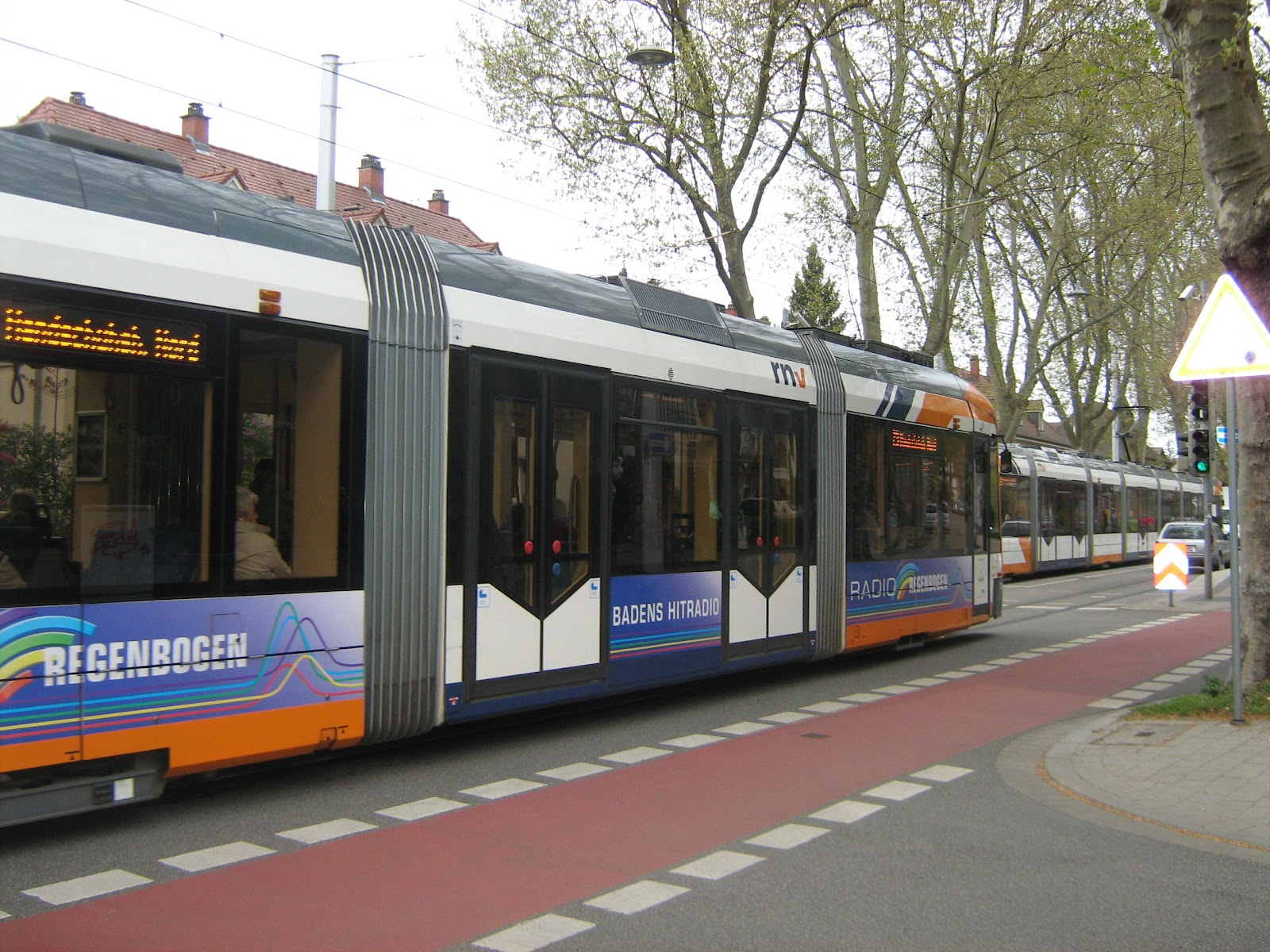
To give you a better feeling for what students at the European Study Center see as they come and go, here are a few pictures of the streets and buildings that are within a 10-minute walk.