Showing posts with label Pre-departure information. Show all posts

Monday, November 18, 2013

The Questions You Should Ask . . . 
By: Liam Walsh

             The first article I read from “When in Germany, Do as the Germans do,” is titled “Questions you should ask – part 1.” In this article it proposes three questions you should ask yourself before you leave for Germany. I found this article to be ironic but eye opening because I read it after I already left, but it gave some insight to activities that I already performed without thinking much about it.
            The three questions that the article asked were: 1) Will my credit card work in Germany? 2) Will my cellphone work in Germany? 3) How about electricity and appliances? The reason that there are important question to think about before leaving is because European and more specifically German standards of living are much different then those found in America.
            The article breaks down the questions one-by-one and gives us their answers. For question 1, they say that most major credit cards are accepted in restaurants and shops that take credit cards; however they do note that not all stores accept credit. For question 2, they wrote that phones from North America won’t work Germany, but phones from England will. Lastly, for question 3, they say that German electricity comes in 220-volt, 50-hertz variety, which will destroy most North American 110-volt appliances without a converter.
            After reading the article I thought about my experience with my first week in Germany, and how this questions applied to my stay so far. For the credit card, I know that I can take money out of the ATM near by, which I might be doing often. It’s rare that I see a store that takes credit cards at all. I think REWE does and Sports Arena does, but my theory is that they only do so because they are major chains in a touristy area. For the second question I already dealt with my phone before I left. I called Verizon (my carrier) and let them know I was going abroad. So my phone can make calls and send texts because I’m on the Vodafone network. However, I should note that I don’t use the phone unless I am connected to Wi-Fi. As for the third question, I have a converter plug to use for my phone and laptop, however I don’t have a transformer so my alarm clock that I brought won’t work.

            Throughout the text I found that the article’s questions and answers are mostly correct. The only reason I say mostly is because with IPhones 4s and 5 you can have international usage, so through a technicality I can use my phone, but I still choose not to so I don’t have a major debt when I get back.  The lesson I learned from reading this article and thinking about how it relates to my first week here is that before you travel anywhere, outside the country or to another part of town, you should always think of how different it can be, similar to how in New Jersey you can’t pump your own gas, yet in New York most gas stations are self-service.

Wednesday, February 27, 2013

Time for a Tour.


We are proud to announce that the ESC now has a YouTube channel. Check it out here 

http://www.youtube.com/user/EuropeanStudyCenter 

Our premier video is a virtual tour of the ESC. Be sure to stay tuned for further videos which will help you get to know the ESC better.

Friday, August 10, 2012

Money, Money, Money!

Going abroad means going to another country, where a lot of new and different places, people
and customs will expect you. This, of course, includes different money, as well.

Money in Germany

Throughout much of Europe, including Germany, the currency is the Euro (€ or EUR).
1 Euro is divided into 100 cents and coins and paper bills come in many different denominations.
You can find further information on the European Central Bank's website

Exchange Rates

Exchange rates are constantly changing, so please make sure, you check the current rates frequently if you want to exchange larger amounts of cash or charge items to your credit card.
www.xe.com is a commonly used website where you can check exchange rates.

How to Change Your Money from Home to €

Most students find it easiest to use a Visa or MasterCard debit or credit card from home to get cash
from an ATM which can be found in most banks and big shopping malls. You will want to make sure you let your bank know that you will be traveling internationally so that they don’t put holds on your account(s) while they verify that your card has not been stolen. If you plan to use a debit card and a credit card, you will likely need to talk to both your bank and the credit card company. You will also want to check and see what fees will be charged each time you use your card while abroad, find out what exchange rates they use and make sure your PIN codes are valid for withdrawing cash from overseas ATMs.
It is important to be aware of what your maximum withdrawal amount per day is, as well.
Because of the time difference, if you take out the maximum amount allowed in the evening, you will not be
able to take anything out of your account the next morning because it is still the previous day in the U.S.

Travelers’ checks are another way to obtain local currency. However, these can only be cashed in a bank with your passport and you will be charged a fee for doing so.

If you would like to exchange cash, the best place for you to exchange your money is at a bank or at the airport, because they use official exchange rates. Here you should again expect to pay a fee. You should never exchange money with someone on the street. This method of getting Euros is ok for, but we do not recommend traveling with large amounts of cash in any currency.

German Bank Accounts for Study Abroad Students

In general, it is not necessary to open a German Bank account. For students staying over a period of several months (generally more than one semester) or completing an internship, it may be necessary to open a non-resident account at a local bank. Information about such accounts is best obtained directly at the bank.

Can I Pay by Card?

As a traveler in Germany, you should also be aware that although more and more places are accepting debit and credit cards, there are still many places that only accept cash or that require a minimum purchase before accepting cards. It is thus wise to get used to carrying a bit of cash with you at all times. You will find that this can be a good way to stay within budget. If you only buy as much as you have cash on hand to pay for, there is no way for you to exceed your account limits.

Friday, July 13, 2012

Will my cell phone work in Germany?

Most of us, whether young or old, have trouble separating ourselves from our cell phones. We use them as alarms, clocks, entertainment, and ways of staying connected through texting, e-mail, facebook, chat programs and as telephones. For safety reasons, students studying abroad at the European Study Center receive a cell phone upon arrival. They come with a SIM card to which money can be uploaded for inexpensive, pre-paid phone calls.

But what if students want to continue to use their beloved cell phones from home while here? They need to be sure to discuss the possibilities with their cell phone provider. There are too many variables to list them all here, but students who do not take the time to inform themselves well generally end up unexpectedly unhappy about their phone not working in Germany at all (which is fairly standard), or paying extravagant roaming fees. Charging their cell phones may also be an issue if they don't take the time to look into electrical converters as discussed in this earlier post.


No matter what, all students receive a cell phone as part of the program so that they'll have their own German phone number. It will be much less expensive for new friends to reach them on a local number than an international one. The good news is that incoming phone calls are always paid by the caller, not the receiver, so, unlike in the U.S., it's free for students to receive calls on their cell phones.

Thursday, July 12, 2012

Dress code

At the European Study Center, one of our goals is to integrate German culture into the atmosphere there. It is because of this goal that we expect that students present themselves in an appropriate manner for all occasions, whether at the European Study Center or on official excursions. Europeans generally consider it very important to always dress appropriately when in public areas and they often dress much nicer than North Americans. Does this mean our students can't wear jeans to class? No. It does, however mean, that they shouldn't wear sweat pants, pajamas, or "jogging" clothes outside of the student living areas (unless they are actually currently jogging in the case of the last example). Those planning on coming to the European Study Center should plan on bringing a mixture of clothes – business casual, dress up, and casual wear. Our staff is always happy to give advice if you're not sure what to wear.

Thursday, June 28, 2012

How much tip should I leave at a restaurant in Germany?

One of the things many Americans like about traveling in Germany is that they are no long expected to leave 15-20% tip in restaurants. This is because some gratuity is already included in the check. However, this doesn’t mean that you shouldn’t leave a tip on top of that. The wait staff generally doesn’t receive the gratuity which has been built into the check directly. 
It is customary to round up to the next full Euro and add a Euro or two (for example, if your bill is 12.55€, it would be appropriate to pay 13-14€ total). When you are eating out in a nicer restaurant, with a large group, or the sum of your bill is quite high, you should leave a 5-10% tip. Tips are usually given directly to the waiter.

Wednesday, June 27, 2012

Taking electronics to Europe

One of the main questions students have is what kinds of electronics they should bring with them to Europe and what type of adapters they will need. Hopefully this information will be helpful:

What to bring?
In general, the fewer things you can bring that will need electricity while in Europe, the better. For the things you absolutely can't live without, be sure to talk to someone knowledgeable about what you need to convert electricity properly for that particular item BEFORE coming to Europe. You may have a difficult time getting what you need in Europe!
Electronics and appliances can be very heavy and take up a lot of space. Hair dryers often have problems even with the proper adapters and transformers. You may want to purchase an inexpensive one in Germany that you will leave behind at the end of your stay.

Voltage
In Germany 230 volts- 50 Hz is the standard. In the U.S., 110 volts - 60 Hz is standard. Most electronics or appliances designed for international travel only need a plug adapter to function properly anywhere in the world. You can generally tell by looking at the power cord for a statement like “Input: 100-240V, 50-60Hz”.
If you try to use electronics or appliances that are not specifically designed to work worldwide without a transformer, you put yourself in a potentially dangerous situation (sparks will often literally fly!) and will likely ruin the item.
If you choose to bring electronic devices with you, it is best to go to a competent travel store or appliance store to make sure you have the proper transformer for voltage and the proper plug adapter. 

Plug adapters
European outlets require plugs with two round prongs. You will want to make sure you purchase an adapter that will work in Germany since within Europe there are fat and thin versions of the two-prong plug and in some countries, a hole in the plug itself is necessary because of a metal prong coming out of the socket. If you intend on traveling to other European countries while in Heidelberg, be sure to bring the proper adapters with you! It will be difficult to find plug adapters converting to European plugs in Europe, so please make sure to bring these with you!
A German electrical outlet
Note it is recessed into the wall-
make sure you buy an adapter that can go into the hole!

An Italian electrical outlet-has 3 prongs instead of 2
A French electrical outlet that requires the plug itself to have a hole


Tuesday, May 1, 2012

It's a beautiful day in the neighborhood!

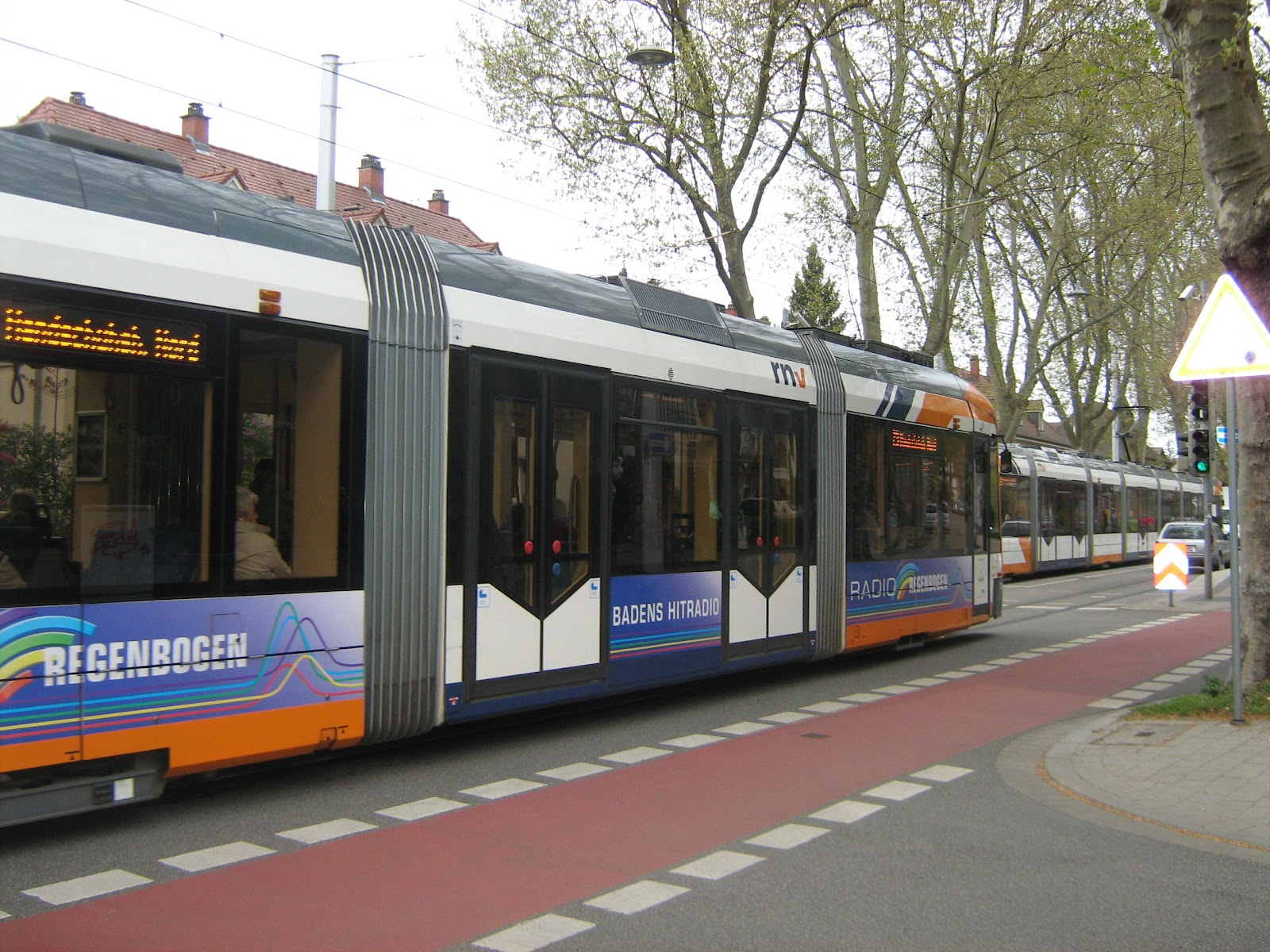
To give you a better feeling for what students at the European Study Center see as they come and go, here are a few pictures of the streets and buildings that are within a 10-minute walk.